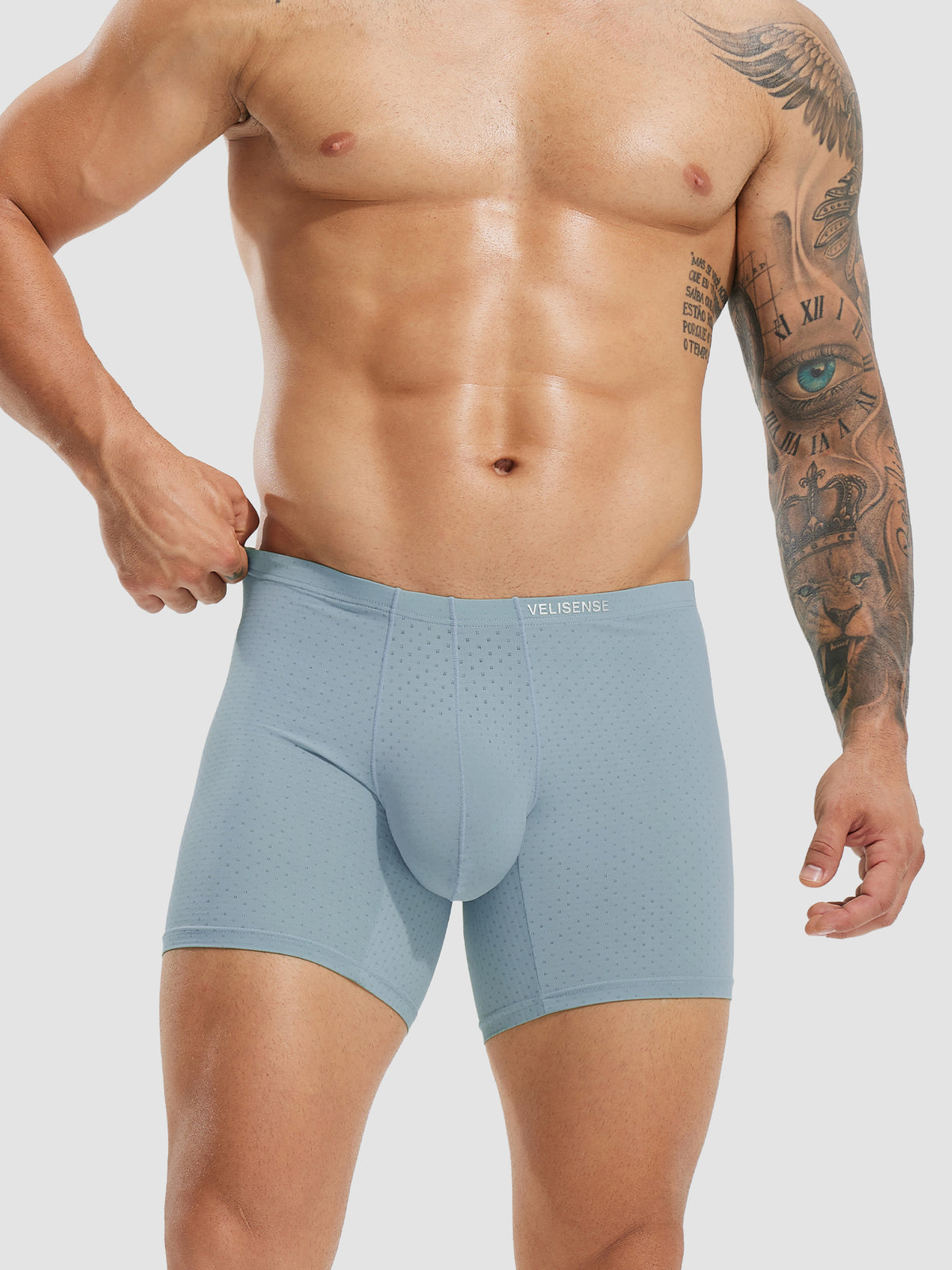
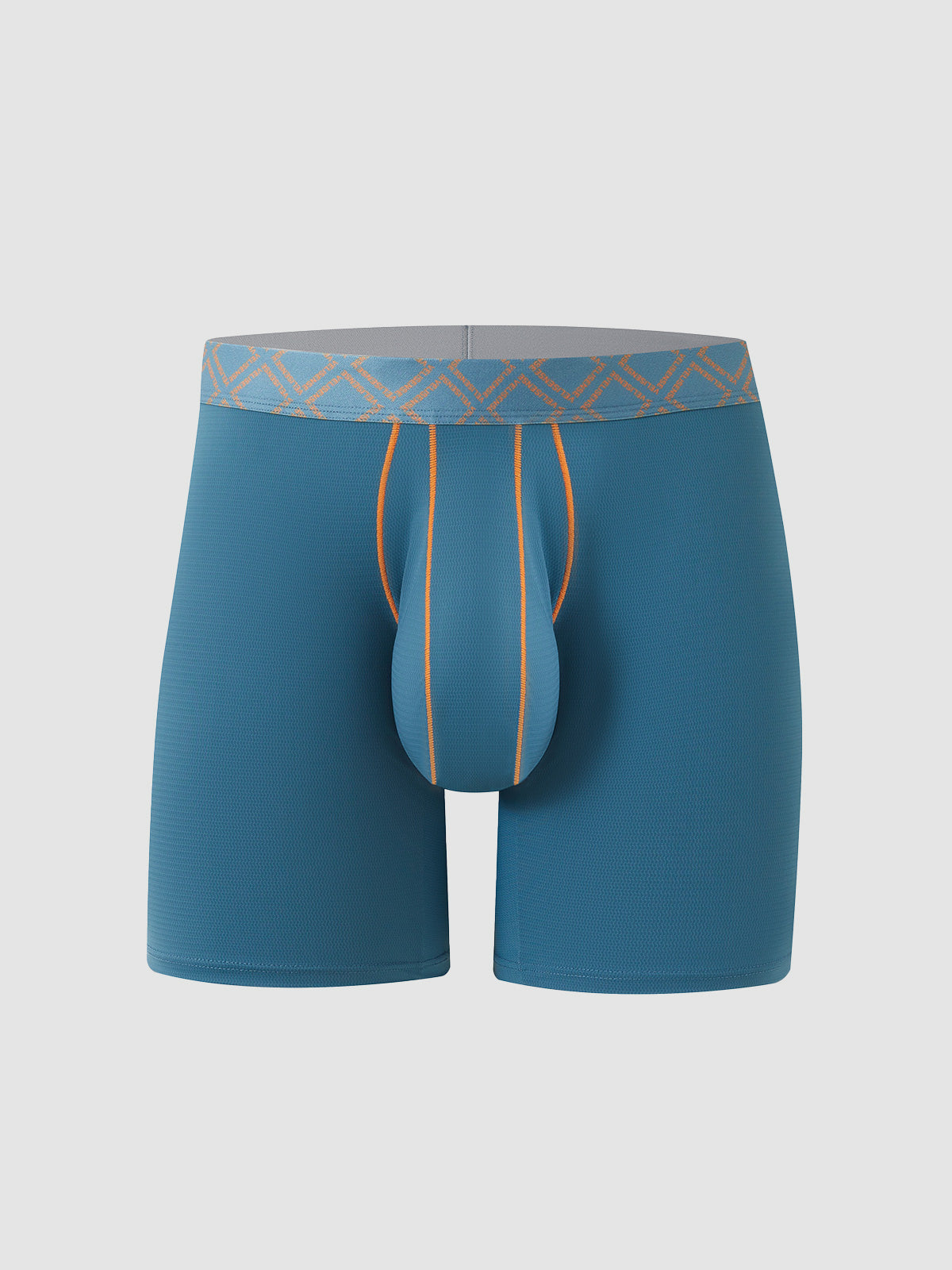
Underwear Should Move With You, Not Against You
A pair of underwear can feel comfortable when you're standing still, but the experience may change when you start training.
During a squat, your hips flex, your thighs move outward, and your body transitions through a wider range of motion. Your underwear needs to accommodate these movements while maintaining a comfortable, secure fit.
For men who train regularly, these details matter.
At VELISENSE, we believe men's underwear should be designed around the way men move. That's why our design philosophy is built around three connected principles:
ROOM.Space where the body needs it. |
SUPPORT.A considered fit and thoughtful construction. |
FREEDOM OF MOVEMENT.Design that works with natural body movement. |
These are more than product features. Together, they express how we think about the relationship between underwear and the body.
In this guide, we'll explore how these principles apply to squat-day underwear, with a closer look at pouch design, seam placement, fabric composition, and garment fit.
1. Why Squats Put Underwear Design to the Test
A squat is a useful way to understand whether underwear has been thoughtfully designed for movement.
As you lower your body, your hips flex and the relationship between your torso and upper thighs changes. Your legs also move outward, placing different demands on the front panel, gusset, and leg openings.
When you return to standing, the direction and distribution of fabric tension change again.
This creates three important design considerations.
ROOM: Accommodating Hip Flexion
As your hips bend, the front of your underwear needs enough space to accommodate the changing body position.
If the pouch is too restrictive, the fabric may pull or create localized pressure.
This is where pouch shape and depth become important. A pouch should be designed around usable space, rather than simply adding more material.
SUPPORT: Maintaining a Considered Fit
Space alone isn't enough.
If a pouch has excess fabric or lacks an appropriate shape, it may shift or bunch during movement.
The goal is to balance room with a fit that feels natural and secure.
FREEDOM OF MOVEMENT: Considering the Whole Garment
The pouch is only one part of the garment.
The gusset, leg openings, and back panel also contribute to how underwear responds when your legs move outward and your hips extend.
At VELISENSE, we see these elements as connected parts of one design system.
Room creates space. Support brings structure. Freedom of Movement connects the two.

2. The Balance Between a Spacious Pouch and a Secure Fit
A larger pouch is often presented as the obvious answer to discomfort during movement. But bigger doesn't automatically mean better.
The real question is whether the pouch provides the right kind of space.
When There Isn't Enough Room
A pouch that lacks sufficient width, depth, or shaping may become stretched during hip flexion.
This can create an upward pulling sensation or pressure around the front panel.
A garment that feels fine while standing may feel noticeably different at the bottom of a squat.
When There Is Too Much Room
Excess material can also affect the wearing experience.
If the pouch doesn't maintain a suitable shape in relation to the body, fabric may bunch or shift.
This is why we believe pouch design should focus on purposeful space rather than maximum volume.
The VELISENSE Principle: Room With Intention
Our approach begins with a simple idea:
Space should be designed, not simply added.
A considered pouch design needs to account for the relationship between the front panel and the rest of the garment.
For us, that means looking at three connected elements:
-
The available room within the pouch.
-
The shape of the pouch in relation to the body.
-
The way the surrounding fabric connects with the pouch and gusset.
The result we're working toward is a more thoughtful balance between room and fit.
3. Seam Placement: Where Construction Meets Movement
The details that shape a garment aren't always the most visible ones.
Seams are a good example. They connect fabric panels, influence how tension is distributed, and determine where different parts of the garment meet the body.
For men who squat regularly, seam construction deserves attention.
Pouch Edge Seams
Pouch edge seams connect the pouch to the surrounding front panel.
During a squat, the front of the garment changes shape as the hips flex. A seam that creates a noticeable raised edge or sits in a high-contact area may become more apparent during movement.
When evaluating underwear, pay attention to how the pouch edges feel both while standing and at the bottom of a squat.
Gusset Seams
The gusset connects the front and back sections of the underwear.
It may experience changing tension as your legs move outward and your hips flex.
Its construction should be considered as part of the garment's overall fit, rather than as an isolated detail.
Leg Seams and Center Back Seams
Leg seams influence how the garment sits around the thighs. The center back seam and surrounding panels also contribute to the way the underwear accommodates changes in hip and seat position.
This reinforces an important point in the VELISENSE philosophy:
Freedom of Movement is not created by the pouch alone. It comes from how the complete garment works together.

Explore the VELISENSE Spacious Pouch Design
If pouch space is one of your priorities, take a closer look at our Second Skin Luxe Texture Boxer Brief 8".
The product features a V-Expand™ Pouch, designed with extended front space, along with flatlock seams listed in the product specifications. These are concrete construction details to consider when evaluating the garment's fit and feel.
4. Fabric Stretch: Supporting Freedom of Movement
Fabric composition matters, but the percentage of stretch fiber alone doesn't tell the whole story.
During a squat, underwear needs to respond to hip flexion, outward leg movement, and the return to standing.
How the fabric stretches, how the panels are cut, and how the garment is assembled all contribute to the final fit.
Why Stretch Direction Matters
In textiles, warp generally refers to the lengthwise direction and weft to the crosswise direction.
The stretch characteristics of a finished garment depend on the textile construction and the orientation of each panel.
For example, limited lateral flexibility may make outward leg movement feel more restrictive. Insufficient flexibility through the front panel may affect how the pouch feels during deeper hip flexion.
This is why we encourage customers to consider fabric behavior alongside the overall garment design.
Understanding the VELISENSE Fabric Composition
The product specifications for our Second Skin Luxe Texture Boxer Brief 8" list the following composition:90% Nylon · 10% Spandex
Nylon is the primary fiber component in this blend, while Spandex contributes elasticity.
However, fiber composition should not be treated as a standalone measure of squat performance. The textile structure, stretch direction, panel design, and garment fit also matter.
At VELISENSE, we believe product information should help customers understand the garment rather than rely on a single percentage as a promise of performance.
5. How to Evaluate Your Squat-Day Fit
Our philosophy of Room, Support & Freedom of Movement can also serve as a practical way to evaluate underwear.
Rather than judging a pair only by how it feels while standing, consider how it behaves through three stages of movement.
Stage One: Standing — Check the Starting Fit
Start with your natural standing position.
Ask yourself:
-
Does the pouch provide enough room without excess fabric?
-
Does the front panel feel comfortable?
-
Do the leg openings sit naturally?
Does the garment feel balanced around the waist, hips, and thighs?
Stage Two: Squatting — Check Room and Movement
Perform a comfortable bodyweight squat.
Pay attention to:
-
Whether the pouch feels restrictive or excessively loose.
-
Whether the gusset creates noticeable pressure.
-
Whether the leg openings accommodate outward leg movement.
-
Whether the fabric pulls around the front or back panels.
The bottom position is especially useful for assessing how the garment responds to deeper hip flexion.
Stage Three: Returning to Standing — Check Stability
As you stand back up, observe how the garment settles.
Does the pouch remain comfortable? Do the leg openings maintain a natural position? Does the fabric return without repeated adjustment?
These observations can help you decide whether a particular design suits your body and training preferences.
6. Different Workouts, Different Design Priorities
The same pair of underwear may work well across several activities, but different movements place different demands on garment construction.
Activity |
Design details to consider |
Main movement |
|---|---|---|
|
Squats |
Pouch, gusset, leg openings |
Hip flexion and outward leg movement |
|
Deadlifts |
Front and back panels, gusset |
Hip hinging and extension |
| Running |
Pouch fit, leg construction |
Repetitive movement |
There's no universal requirement to wear different underwear for every workout.
The important thing is whether the garment feels comfortable and stays in a suitable position during the activity.
This reflects another part of our philosophy: freedom of movement should be relevant to real life, not just one exercise.
7. The VELISENSE Design Philosophy in Practice
At VELISENSE, Room, Support & Freedom of Movement is the framework behind how we think about men's underwear.
We don't see these as three unrelated selling points. They are three parts of a complete wearing experience.
Our Second Skin Luxe Texture Boxer Brief 8" brings several of these product details together: a V-Expand™ Pouch, flatlock seams, a 90% Nylon / 10% Spandex fabric blend, and an 8-inch inseam.
The V-Expand™ Pouch is designed to provide extended space at the front.
For us, Room means recognizing that different parts of the body have different space requirements, especially when movement changes the body's position.
The intention is to offer a pouch option for men who prefer additional room up front.
SUPPORT — A Considered Fit and Construction
Support, in our design philosophy, is about considering the overall relationship between fit and construction.
The product page lists a Stay-Put Waistband and flatlock seams as design details. It also describes the waistband as designed to stay in place during everyday movements such as sitting, walking, and bending.
These details are part of the garment's construction story, rather than a claim that every body will experience the same fit.
FREEDOM OF MOVEMENT — Fabric and 8-Inch Inseam
The product's 90% Nylon / 10% Spandex composition and 8-inch inseam are specific details customers can review before choosing their size and preferred fit.
Freedom of Movement is the broader principle that brings these details into context: how the fabric, pouch, seams, and leg construction work together as one garment.
Discover the VELISENSE Second Skin Luxe Texture Boxer Brief 8"
If you're looking for men's underwear with a spacious front pouch and a longer boxer brief cut, explore the product details and available sizing.
Frequently Asked Questions
1. Are spacious pouch boxer briefs better for squats?
They may be a good option for men who prefer more room in the front. However, pouch shape and overall fit matter as much as size. The goal is to find a balance between room and a secure, comfortable fit.
2. Does a larger pouch automatically provide more support?
No. More room and more support are not the same thing. Pouch shape, garment construction, and the relationship between the pouch and surrounding panels all contribute to the wearing experience.
3. Does more Spandex mean better freedom of movement?
Not necessarily. Spandex contributes elasticity, but finished-garment flexibility also depends on textile construction, panel orientation, and fit.
4. What makes the VELISENSE Second Skin Boxer Brief different?
The product features a V-Expand™ Pouch, flatlock seams, 90% Nylon / 10% Spandex fabric, and an 8-inch inseam. These details reflect the product's construction and fit specifications.
5. Where can I find the product's sizing and fit information?
You can review the size selector and size chart on the VELISENSE Second Skin Luxe Texture Boxer Brief 8" product page
ROOM. SUPPORT. FREEDOM OF MOVEMENT.
We believe great underwear starts with understanding the body.
It means knowing where space matters, how construction contributes to fit, and why freedom of movement should be considered from the beginning of the design process.
At VELISENSE, these principles guide how we talk about men's underwear and how we want customers to think about the products they choose.
Room for what matters. Support through thoughtful construction. Freedom to move naturally.
That's the VELISENSE approach.
VELISENSE
Designed Around the Way Men Move.
Explore the VELISENSE Second Skin Luxe Texture Boxer Brief 8" →
Share:
Underwear That Doesn't Stick to Your Thighs: The Ultimate Guide to Comfort
Deadlifts and Strength Training: Where Does Pouch Stability Come From?