The Role of Elastic Direction and Rear Panel Design
A roomy pouch does not automatically mean a stable fit. During deadlifts and other strength-training movements, underwear needs to move with your body while keeping its shape and position. The difference often comes down to three design factors: how the fabric stretches, how well it recovers, and how the rear panel works with the pouch.
For men who train regularly, these details matter. A pair of men's performance underwear should provide enough room for natural movement without feeling loose, restrictive, or unstable under load.
1. Why Can a Pouch Shift During a Deadlift?

A deadlift is not one fixed position. Your hips, torso, and legs move through several stages, and your underwear has to respond to each one.
-
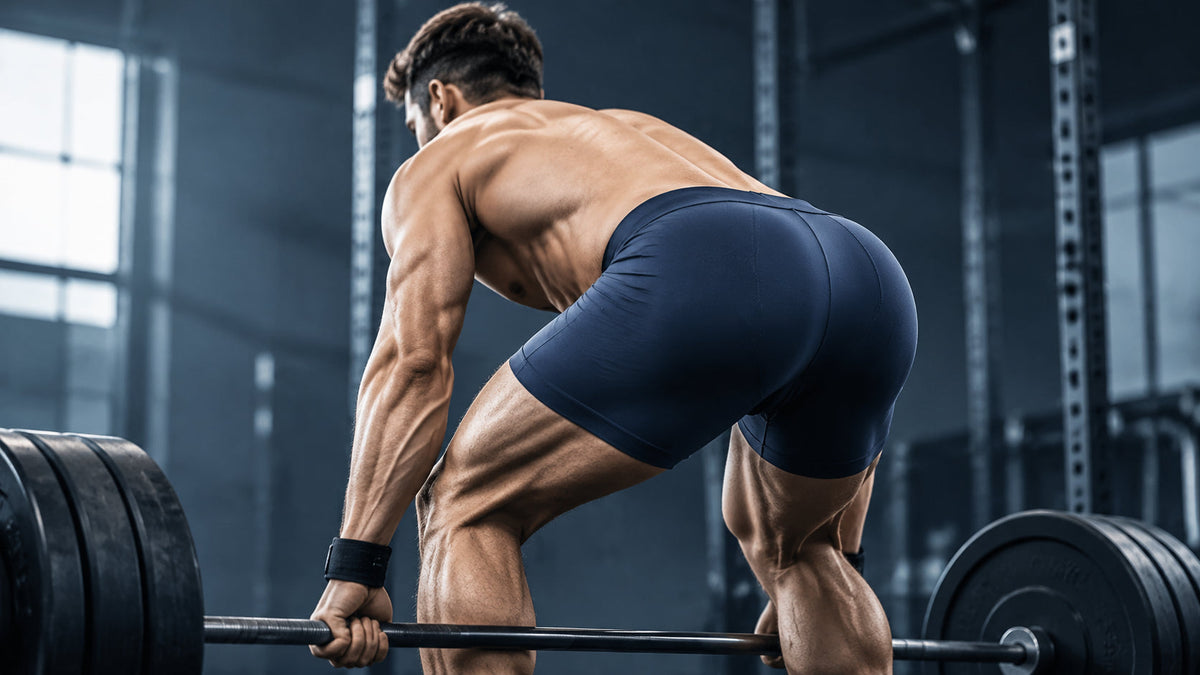
The hip hinge and descent: As you push your hips back and lower your torso, the fabric around the seat and pouch changes tension. If the stretch direction does not match the movement, the fabric may pull the pouch upward or shift the rear panel.
-
The lockout: As you extend your hips and stand tall, the fabric needs to return with your body rather than remain stretched in its previous position.
-
Bracing under a heavy load: Increased abdominal pressure and changes in torso position can affect how the waistband and front panel sit. A waistband that feels comfortable when standing casually may feel different when you brace.
-
Between sets: When you stand, relax your breathing, and reset, the underwear should settle naturally rather than remain displaced.
The key point: pouch stability is dynamic. It is about how the garment responds throughout the lift, not just how it feels when you first put it on.
2. More Room Is Not the Same as More Stability
A spacious pouch solves one problem: it gives the front more room. But room and stability are not interchangeable.
A pouch can feel generous while still moving too much if the surrounding fabric stretches in the wrong direction or the rear panel does not provide a stable foundation. On the other hand, a very tight fit is not automatically better. Excessive compression can feel restrictive, interfere with comfortable breathing, and limit natural hip movement.
The goal is structured freedom:
-
Enough pouch space for a natural fit.
-
Fabric that stretches where your body needs it.
-
Recovery that helps the garment return to its intended shape.
-
A rear panel that works with the pouch instead of pulling against it.
For strength training, the best fit is not necessarily the tightest one. It is the one that stays balanced as your body changes position.
3. Elastic Direction: Why Stretch Is More Than “Four-Way”
Fabric stretch is often described as two-way or four-way, but those labels do not tell the whole story. The direction of stretch matters just as much as the amount.

Lengthwise stretch
Lengthwise stretch follows the fabric's length, often called the warp direction in woven textiles. In knitted fabrics, construction terminology can differ, so the actual stretch direction should be checked rather than assumed.
For boxer briefs, lengthwise flexibility can influence how the garment responds as the torso and hips change position.
Crosswise stretch
Crosswise stretch runs across the fabric width. It can help the garment accommodate changes in body shape and movement around the hips and seat.
However, strong horizontal stretch alone does not guarantee that the pouch will resist upward or downward displacement during a deadlift.
Four-way stretch
Four-way stretch generally means the fabric can extend in both lengthwise and crosswise directions. This can help the garment adapt to multi-directional movement.
But four-way stretch is not a guarantee of better stability. If the fabric stretches easily but does not recover well, or if the rear-panel construction is poorly matched to the pouch, the underwear may still shift.
What matters most: the stretch directions should complement the movements your body makes, while the overall construction maintains a balanced fit.
4. Stretch Recovery: The Part You Notice After Repeated Reps
Stretch tells you how far a fabric can extend. Recovery tells you how well it returns.
This distinction is important during repeated sets. A fabric may feel flexible during the first repetition, but if it does not recover adequately after being stretched, the garment can gradually feel less secure.
Recovery is influenced by several factors:
-
Fiber blend: Elastane (also known as spandex) contributes stretch, but the percentage alone does not establish how well a finished fabric performs.
-
Knitting or weaving construction: The way yarns are arranged affects both stretch and recovery.
-
Fabric weight and structure: Two fabrics with the same fiber percentages can behave differently.
-
Repeated wear and washing: Elastic performance can change over time, depending on fabric quality, care, and use.
This is why a label showing a high spandex percentage should not be treated as proof of superior stability. A well-designed fabric blend and construction matter more than one number in isolation.
5. Rear Panel Design: The Structure Behind Pouch Stability
The pouch is only one part of the garment. The rear panel helps determine how the underwear sits across the hips and seat, and how tension is distributed when you hinge and extend.

Rear center seam
A center seam can help shape the back of the garment, depending on its placement, curve, and how it is joined to surrounding panels. Its presence alone does not guarantee better stability. The seam needs to work with the fabric and the wearer's body shape.
Single-panel, multi-panel, and Y-shaped designs
Different rear-panel patterns distribute fabric and tension differently.
-
Single-panel construction uses a broader piece of fabric and may create a simpler back shape.
-
Multi-panel construction uses separate pieces to shape the seat and distribute tension across specific areas.
-
Y-shaped or contoured construction can create a more tailored fit around the seat, depending on the pattern and seam placement.
There is no universally superior pattern. What matters is whether the rear panel follows the body's movement without pulling the pouch out of position.
The connection between the rear panel and pouch base
The point where the pouch joins the body of the underwear is especially important. If the front pouch and rear panel work as separate structures rather than as one coordinated garment, movement in one area can affect the other.
A stable design considers the pouch base, rear-panel shape, and waistband together—not as isolated features.
6. The Waistband, Leg Openings, and Pouch Base Work as a System
Even a well-designed pouch depends on the rest of the garment.
The waistband helps establish the garment's position on the body. If it shifts during bracing or hinging, the position of the pouch can change with it.
The leg openings influence how the lower part of the boxer briefs sits on the thighs. Their shape and tension should complement the overall fit rather than create an imbalance between the upper and lower sections.
The pouch base connects the front support area to the body of the garment. Its construction can affect how the pouch responds when the hips move.
These elements should be evaluated together. A stable waistband cannot compensate for every issue in the rear panel, just as a spacious pouch cannot compensate for poor fabric recovery.
The VELISENSE Second Skin Luxe Texture Boxer Brief 8" lists a Stay-Put Waistband designed to remain in place during everyday activities such as sitting, walking, and bending.
7. What Changes When You Wear a Lifting Belt?
A lifting belt adds another layer of pressure around the waist and torso. During a heavy set, the belt and waistband may occupy similar areas, which can change how the underwear feels.
8. How to Test Pouch Stability Before You Buy
Product descriptions can tell you about fabric composition and design features, but your own movement is the best way to assess fit.
Use this four-stage check when trying on a pair of men's workout underwear:
|
Test position |
What to look for |
|---|---|
|
1. Starting position |
Does the pouch sit naturally without needing adjustment? |
|
2. Bottom of the hinge |
Does the pouch move upward, or does the rear panel feel as though it is being pulled? |
|
3. Standing lockout |
Does the fabric return smoothly as your hips extend? |
|
4. Between-set reset |
Does the garment settle back into a comfortable position when you stand and breathe normally? |
A useful test should focus on the whole garment. Do not judge stability only by how much room the pouch provides or how firmly the waistband feels.
9. Deadlift Days and Squat Days: A Small but Useful Distinction
Both deadlifts and squats require underwear that moves with the hips, but the movement patterns are different.
During a deadlift, the hip hinge and transition to lockout place particular emphasis on how the fabric responds as the hips move backward and then extend.
During a squat, the hips and knees move through a deeper combined range of motion. That makes overall flexibility and fit through the lower body especially relevant.
The same basic principles still apply: appropriate stretch direction, reliable recovery, and coordinated front and rear construction. The emphasis simply changes with the movement.
10. A Closer Look at VELISENSE Second Skin Luxe Texture Boxer Brief 8"
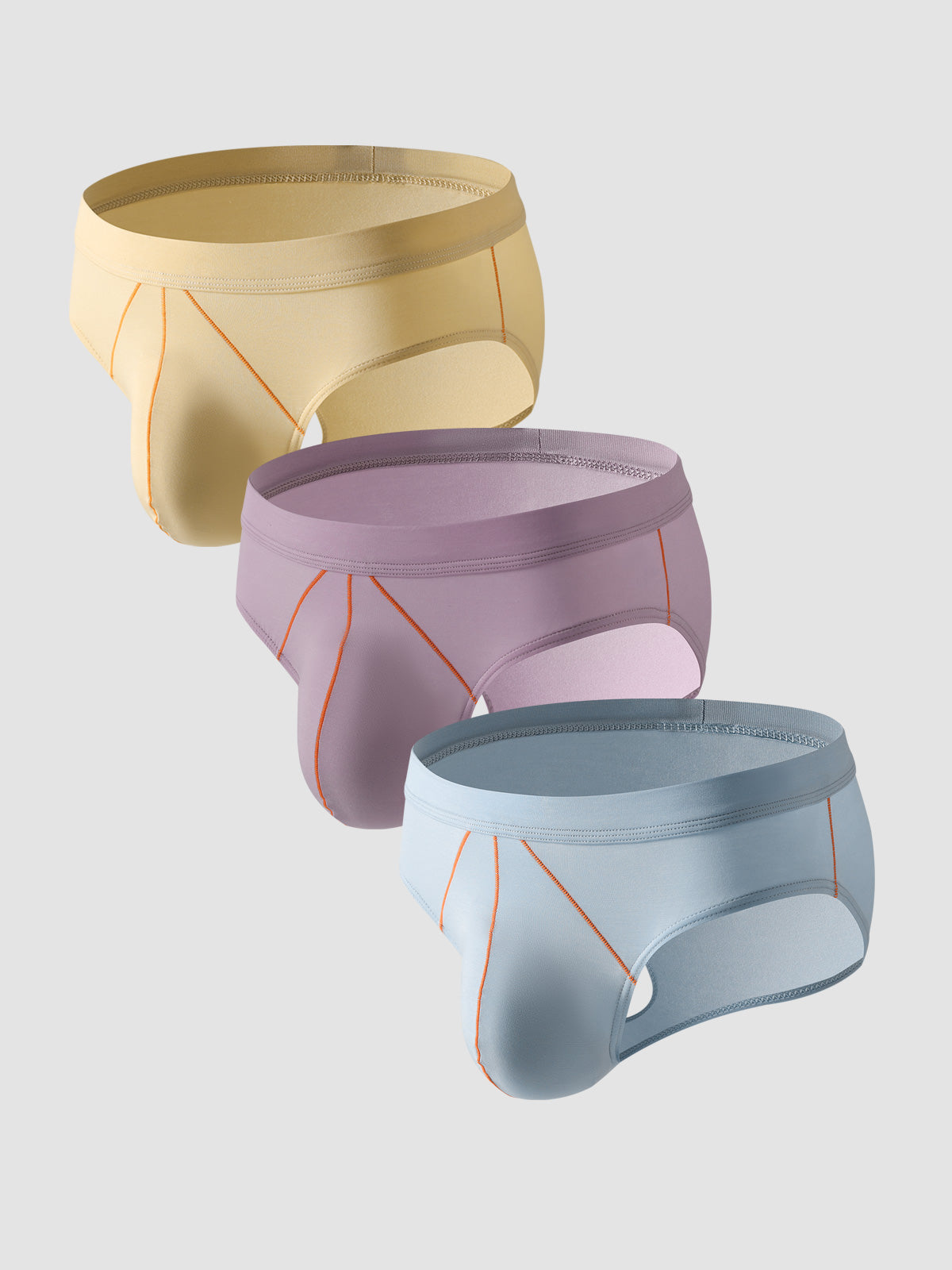
For men who prefer a more spacious front fit, the VELISENSE Second Skin Luxe Texture Boxer Brief 8" brings together several clearly stated design features:
-
V-Expand™ Spacious Pouch: Designed to provide more room at the front.
-
90% nylon / 10% spandex: The fiber composition listed on the product page.
-
Stay-Put Waistband: Designed to stay in place during everyday movement.
-
8-inch inseam: A longer boxer-brief cut.
-
No-fly design: A streamlined front construction.
-
Flatlock seams: A low-profile seam finish.
The product is listed in sizes S–XXL. The product page also states that returns are accepted within 30 days for unworn items with original tags; final-sale items are excluded. Check the current product page for the latest availability and terms.
These details make the product worth considering if you value a spacious pouch and a longer boxer-brief silhouette.
Explore the VELISENSE Second Skin Luxe Texture Boxer Brief 8".
Frequently Asked Questions
1. Why does my pouch still shift even when my underwear has a large pouch?
Because space and stability are different things. Pouch movement can also be affected by stretch direction, fabric recovery, rear-panel construction, and how the waistband sits during movement.
2. Is four-way stretch always better for deadlifts?
Not necessarily. Four-way stretch can help a garment adapt to multi-directional movement, but it still needs suitable recovery and a well-designed pattern. Stretch in every direction does not automatically mean better support.
3. Does a higher spandex percentage mean better pouch stability?
No. Spandex contributes elasticity, but the finished fabric's construction and recovery also matter. Fiber percentage alone cannot predict how stable a garment will feel during repeated lifts.
4. Should I choose tighter underwear for heavy strength training?
Not simply because you lift heavy. Excessive tightness can feel restrictive and interfere with comfortable movement and breathing. Look for a balanced fit that provides room without feeling loose.
5. Should I focus more on the pouch or the rear panel?
Both matter. The pouch provides front space, while the rear panel helps establish how the garment sits across the hips and seat. The most useful design is one in which the two work together.
The Right Structure Makes the Difference
When choosing deadlift underwear, do not stop at the pouch size or the phrase “four-way stretch.” Look at the complete design: elastic direction, recovery, rear-panel construction, waistband stability, and the connection between the pouch and the rest of the garment.
The right pair should move with you, return to shape, and feel comfortable through every stage of your training.
Choose structure, not just stretch.
يشارك:
Squat-Day Underwear: Room, Support & Freedom of Movement — The VELISENSE Approach